Free To Use Review - The Safest Royalty-Free Music Platform for Content Creators
Thanks for stopping by this Free To Use review 😊!
Picture the scenario every video creator dreads. You finish a YouTube or TikTok edit, drop in a song tagged "free to use music," and publish. A few days later a copyright claim lands in your inbox. Your revenue gets frozen, your reach collapses, and you are left asking how something labelled safe managed to burn you.
That story plays out far more often than most people expect. It is also precisely the headache Free To Use was built to remove. What makes it actually reliable where most royalty-free music libraries fail? The platform owns every single track in its catalog outright — not just a licence to host it, but full, permanent ownership.
If a "free" song has ever been claimed by its original uploader months after you used it, you already grasp why ownership matters. When the platform holds the rights, nobody can pull the track, rewrite the terms, or file a Content ID claim against your video later. That is the entire ballgame.
Why "Free" and "Royalty-Free" Mislead Creators
Before looking at the product itself, it is worth clearing up a terminology trap that snags nearly everyone at some point.
Royalty-free is not the same as copyright-free. It only means you are not billed a recurring royalty each time the music plays. The track is still under copyright. Someone still owns it. And you are still bound by a licence whether you read it or not.
Free to download is not the same as free of risk. A download button that says "free" tells you nothing about who controls the rights, whether those rights might shift next month, or what happens if a claim lands on your video.
The label on the button is not what shields you. The ownership behind it is. Most royalty free music for youtube collections make it needlessly hard to learn who truly owns what, and that is exactly where trouble begins.
Inside the Music Catalogue
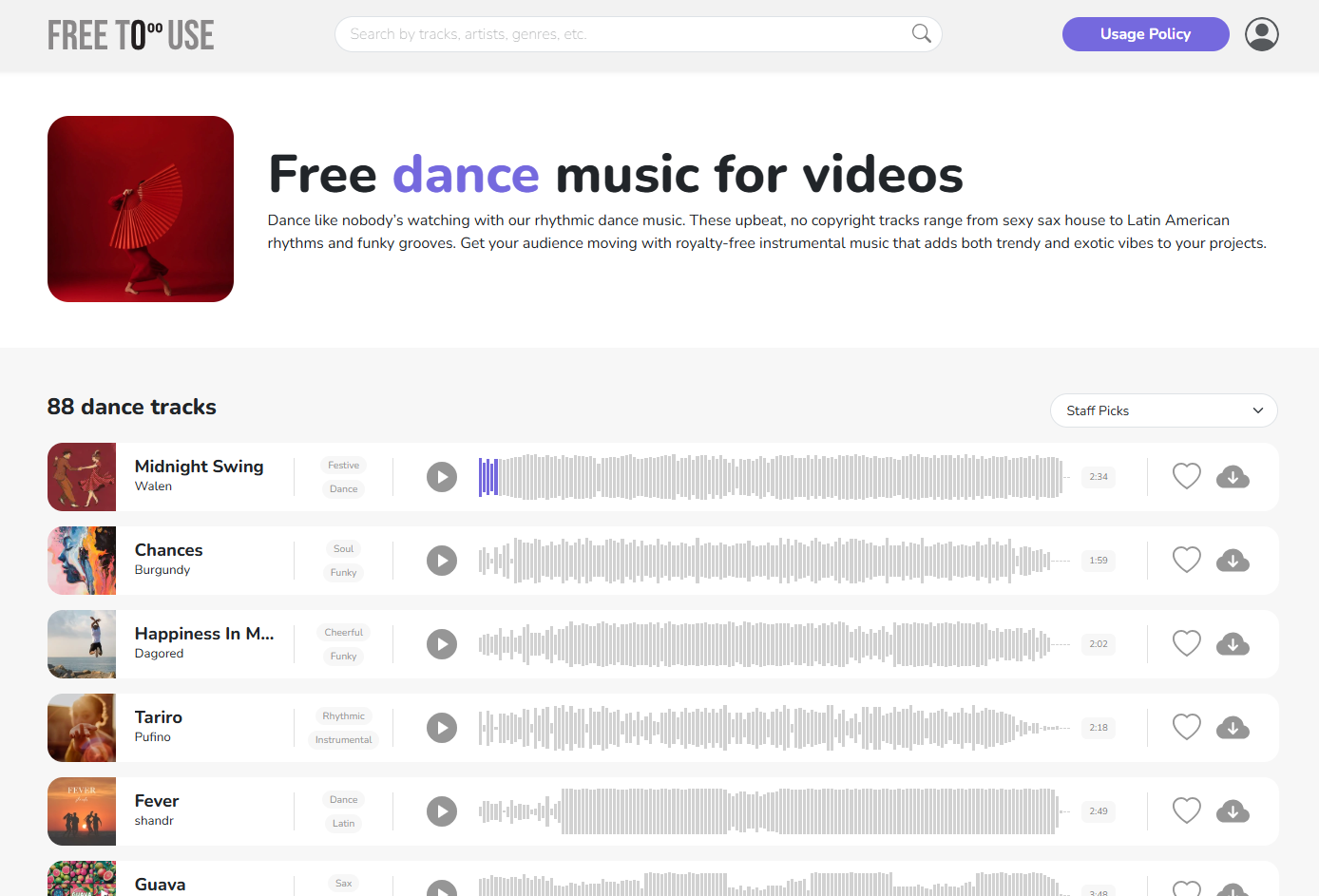
For this review I spent a full hour browsing the library to see whether discovery holds up when you actually need something specific.
The collection is arranged around moods and genres that make sense for video work. You get the obvious buckets — cinematic, corporate, vlog, upbeat, ambient, lofi, electronic, hip-hop, and jazz — plus finer moods like inspiring, emotional, energetic, relaxing, and epic. Seasonal sets such as christmas, halloween, and summer are included too, along with activity tags like gaming, workout, travel, cooking, and sports.
The catalogue is not the largest out there, but the quality floor is high. I listened to composers such as massobeats (their track "gingersweet" nails that smooth lofi feel), Pufino ("Eternity" if you want something cinematic), Hazelwood ("At Ease" sounds exactly like its name), Aetheric, Johny Grimes, and Lukrembo. These are genuine musicians, not random uploaders, and you can hear it.
The roster spans more than 60 artists. Aylex covers much of the corporate and motivational material, Zambolino goes big on dramatic and epic work, Moavii leans chill and tropical, and massobeats anchors the lofi end. The range runs from classical (Orchestronika, Aeris) to electronic (Nebulite, Calima), with folk, rock, and world music in between. Every track is reviewed and tagged by the same person, so "cinematic" means the same thing across the whole library. Search, and you find what you expect.
The Ownership Model, Explained
Almost every copyright free music site sits in one of two camps under the hood. The difference rarely appears on the homepage, yet it changes everything about how safe your videos really are.
Upload-Based Libraries: The Producer Keeps the Rights
This model is everywhere. The platform acts as a host. Independent producers upload tracks, mark them free or licensable, and keep the copyright. The site is a directory, not an owner.
It works until it doesn't. Because the producer still owns the track, they can pull it, change the terms, or register it with YouTube's Content ID system and start claiming every video that ever used it — yours included, even if you followed the rules at the time. The platform cannot help because it never held the rights. You are stuck filing disputes while your video sits demonetized.
Owned-Catalogue Libraries: The Platform Holds the Rights
This approach is rarer but far safer. The platform buys the full rights — both recording and composition — directly from the artists. Not a hosting licence. Actual ownership.
With that ownership, the music can stay free forever because the platform is not betting on a producer's goodwill. Terms stay stable. No surprise removals. And if a false claim hits your video, the platform resolves it directly because the rights are theirs. No chasing a producer. No fighting alone.
Free To Use sits squarely in this second camp. They own every track outright, which is how they can offer unlimited free downloads and step in when a bogus claim appears. An owned catalogue beats a pile of third-party uploads every time. Free tells you the price. Ownership tells you the risk.
Real Human Artists, Never AI
Free To Use works exclusively with human composers. Every track is made by an actual musician and reviewed by a real person before going live.
Beyond the quality gap, there is a legal reason this matters. In most jurisdictions, purely AI-generated music cannot be copyrighted. That might sound convenient, but it is the opposite. If nobody owns a track, nobody can stand behind it, confirm it is original, or defend you when a dispute arises. There is no one to clear the rights.
Free To Use sidesteps this entirely. Human-made tracks can be owned and defended. For creators who need copyright free music for youtube videos or no copyright music for tiktok videos, that legal clarity is the point.
YouTube Whitelisting and Claim Resolution
Free To Use has its catalogue registered with YouTube's Content ID system and Meta's Rights Manager. Odd for a platform that wants you to use music freely, right? It is actually smart. Being inside those systems lets them block unauthorized claims and fix false ones fast.
Paid users can whitelist their YouTube channel. This tells YouTube your channel is authorized, and Content ID claims get blocked before they ever appear. If one slips through somehow, you email the platform and they sort it directly, usually within one to three days.
Free users follow a similar path: add the correct attribution, publish, and if a claim shows up, email them with the link. They handle it because they own the rights. You never fight it yourself. Upload-based platforms simply cannot do this for you.
How Free Stays Free
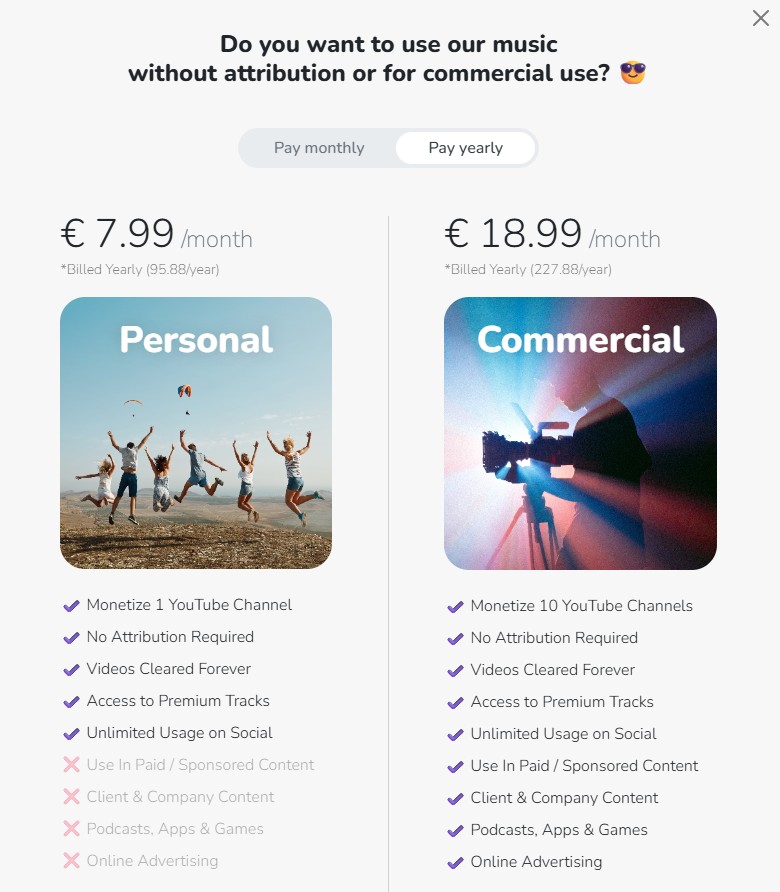
If everything is free, how does the platform sustain itself? Free To Use ApS, based in Copenhagen, has run this model since 2016. The free tier with attribution drives visibility. Paid plans (Personal at €7.99/mo, Commercial at €18.99/mo, plus one-time licences) cover creators who need to skip attribution or use music commercially. Because they own the catalogue outright instead of paying per-stream royalties, the math holds. Upload-based platforms live or die on whether producers keep uploading. An owned-catalogue platform lives or dies on whether creators trust it.
Hands-On: Using the Platform
I used the site the way any creator would: I needed upbeat, energetic background music for a product demo. Here is what happened.
I landed on the homepage and saw the music browser immediately. No splash screen. No email prompt. Just tracks, categories, and a search bar. I clicked "corporate" and scrolled. Each entry showed the artist, track name, duration, and a play button. I previewed a few, found one by Aylex I liked, and hit download.
A modal appeared with the download button and the exact attribution text I needed:
Music from Free To Use
Source: https://freetouse.com/music
Track: [Track Name] by Aylex
Copy, download MP3, done. Under two minutes from landing to file in my downloads folder. No account. No email confirmation. No credit card. No "you have 3 downloads remaining."
If you publish multiple videos a week, this is a genuine time saver. No managing another login, no tracking limits across platforms — just grab and go.
I also browsed by artist. Clicking massobeats pulls up a dozen-plus tracks in that warm lofi style. Zambolino ranges from orchestral drama to funky upbeat material. When you find an artist whose sound fits your content, you can dig into their whole catalogue.
Pricing Plans
Here is what each plan costs and what you get:
Free Plan
- Cost: Completely free
- Downloads: Unlimited, no account required
- Attribution: Required in video description
- Use Cases: Personal social media content, YouTube videos, TikTok posts, Instagram Reels, Twitch streams, podcasts
- Monetization: Allowed, as long as proper attribution is included
- Review Verdict: Exceptional value. Being able to download unlimited tracks with no sign-up and use them in monetized content is genuinely rare.
Personal Plan (€7.99/month annual, or €11.99/month monthly)
- Attribution: Not required
- Channel Whitelisting: One YouTube channel can be whitelisted to block Content ID claims
- Use Cases: Same as free, plus you get to skip the attribution line
- Best For: Creators who publish frequently and want a cleaner video description
- Review Verdict: Fair price for the convenience of removing attribution and gaining whitelist protection. If you publish several videos per week, the time saved adds up.
Commercial Plan (€18.99/month annual, or €23.99/month monthly)
- Attribution: Not required
- Channel Whitelisting: Up to 10 accounts can be whitelisted
- Use Cases: Commercial content, brand videos, marketing campaigns, client work, one digital product
- Best For: Agencies, marketers, businesses, and creators doing client work
- Review Verdict: Strong value for anyone producing commercial content. Whitelisting up to 10 channels makes it suitable for teams and agencies.
Pro License (€50 one-time, single track)
- Attribution: Not required
- Channel Whitelisting: One channel, locked permanently once set
- Use Cases: Unlimited commercial content plus one digital product with a specific track
- Best For: Projects that need a signature track for commercial use
- Review Verdict: Reasonable one-time fee for a track you plan to build a campaign around.
Broadcast License (€450 one-time, single track)
- Attribution: Not required
- Use Cases: Everything in Pro, plus TV, film, radio, and large-scale advertising
- Best For: Major productions, broadcast commercials, theatrical releases
- Review Verdict: Industry-standard pricing for broadcast rights. On par with or cheaper than most production music libraries.
Important note across all paid plans: Any content you publish while your subscription is active stays cleared permanently, even if you cancel later. Your older videos are safe. Only new videos published after cancellation would need fresh coverage.
Who Should Use It?
Here is how different kinds of creators would actually put this platform to work:
YouTubers and Long-Form Video Creators
If you publish videos longer than a few minutes on YouTube, you need copyright free music for youtube videos that stays safe over time. A video you publish today might still earn ad revenue two years from now. The last thing you want is a retroactive copyright claim killing the monetization on your back catalogue. The ownership model is the biggest selling point here. Tracks owned by the platform cannot get pulled or claimed by a third party later. For YouTubers building evergreen libraries, that long-term safety is worth more than a million tracks to choose from.
TikTok and Instagram Creators
Short-form creators need no copyright music for tiktok videos and Reels that are quick to grab and safe to monetize. The no-account workflow fits perfectly. You are probably making content on your phone, editing quickly, and publishing fast. Opening a browser tab, finding a track in 30 seconds, and downloading it without logging in matches that workflow. The free tier covers everything a short-form creator needs, with the option to upgrade to Personal to skip attribution and whitelist your channel.
Twitch Streamers
Live streaming adds complexity. You need music that plays safely in the background without triggering muted VODs or copyright strikes. Free To Use covers Twitch streaming in its licence, and because the platform manages its own Content ID presence, you are far less likely to hit automated muting issues. The catalogue has strong coverage in lo-fi, chill, and ambient genres that work well as stream background music.
Podcasters
Podcasts need consistent intro and outro music, plus occasional background tracks for segments. The free plan covers all of this with attribution. If you run a podcast network or produce shows for clients, the Commercial plan lets you skip attribution and whitelist up to 10 channels. The instrumental nature of most tracks also means they sit well under voice without competing for attention.
Video Editors and Freelancers
If you edit videos for clients, music licensing is a constant headache. You need tracks cleared for commercial use by your client, not just for personal use by you. The Commercial plan at €18.99 per month covers unlimited commercial content for up to 10 accounts, a fraction of what you would pay for individual licences on most stock music sites. The one-time Pro and Broadcast licences also give you a clean paper trail for high-budget projects.
Businesses and Marketing Teams
For companies producing brand videos, ads, social content, and internal communications, Free To Use offers a rare mix of quality and licensing clarity. The Commercial subscription covers marketing campaigns, paid ads, and corporate videos without per-video fees. The privacy-first approach also means your team is not tracked or profiled while sourcing music, a nice bonus for organizations that care about data practices.
Educators and Course Creators
Online courses, tutorials, and educational content need background music that enhances rather than distracts. The instrumental focus of the catalogue works well here, and the free tier with attribution is perfectly adequate for most educational use cases. If you sell your courses commercially, the Commercial plan covers that use.
What Makes Free To Use Different
- Full Catalogue Ownership: They own every track outright. Most competitors just host uploads. Individual producers can pull tracks or file claims later. Here, nobody can.
- Zero AI Music: Every track is human-made. More competitors now mix AI into their libraries, creating legal grey zones around copyright. Free To Use avoids this.
- Direct Claim Resolution: They own the rights, so they resolve claims. Upload-based platforms cannot.
- No Account Required: Browse, listen, download. No email, no password. Most competitors require at least a free account.
- Single-Reviewer Curation: One person reviews and tags everything, so mood labels mean the same thing across the whole catalogue.
- Privacy-First: No cookies, no tracking, no data collection. Rare in this space.
- Subscription Continuity: Content published while subscribed stays cleared forever, even after you cancel.
Competitive Analysis
| Feature | Free To Use | Upload-Based Platforms | AI-Mixed Platforms |
|---|---|---|---|
| Catalogue Ownership | ✅ Platform owns 100% | ❌ Individual producers | ❌ Often unclear |
| Human Artists Only | ✅ Yes | ✅ Mostly | ❌ Mixed with AI |
| Claim Resolution | ✅ Direct by platform | ❌ You are on your own | ❌ Legally uncertain |
| No Sign-Up Required | ✅ Yes | ❌ Usually required | ❌ Usually required |
| Unlimited Free Downloads | ✅ Yes | ❌ Often capped | ❌ Often capped |
| Consistent Curation | ✅ Single reviewer | ❌ Uploader-tagged | ❌ Automated tagging |
| Privacy Protection | ✅ No tracking | ❌ Tracked heavily | ❌ Tracked heavily |
| Post-Cancel Coverage | ✅ Published content safe | ❌ Often revoked | ❌ Often unclear |
Five Checks for Any Royalty-Free Platform
Five quick checks for any royalty-free music platform, not just Free To Use:
-
Does the platform own its catalogue, or just host uploads? Look for language like "we own all our music" or "exclusive rights." Avoid platforms that only say "producers upload" or call themselves a "community library." The difference is the difference between music that stays safe and music that might get claimed later by its original uploader.
-
What happens if a claim is filed? A platform that owns its music can step in and resolve claims directly. A platform that only hosts uploads usually cannot do anything, because it never held the rights in the first place. You end up filing disputes yourself while your video sits demonetized or blocked.
-
Is the music human-made or AI-generated? Human-made tracks can be owned and legally defended. AI-generated music, in most places today, cannot be copyrighted at all. That means nobody can stand behind it, confirm it is original, or back you up if a dispute comes up. Avoid libraries that quietly mix AI tracks into their catalogues.
-
Are the licence terms clear and stable? Check that the licence covers monetization and every platform you post on, including YouTube, TikTok, Instagram, Twitch, and podcasts, with no regional limits. Make sure older videos stay cleared even if the terms change later. Free To Use explicitly guarantees this.
-
Is attribution required? Plenty of free tiers ask for a short credit in your video description. That is a fair trade, just worth knowing upfront. Free To Use shows you the exact attribution text every time you download a track, so there is no guesswork.
If a library cannot clearly tell you who owns its music, treat that as a warning sign rather than a green light. Free tells you the price. Ownership tells you the risk.
Final Verdict
Free To Use does something most royalty-free music sites cannot: a platform that owns its music can actually protect you. One that just hosts uploads cannot. That single distinction drives everything else.
No AI filler. No producer uploads that disappear or get claimed later. Just a curated catalogue of human-made music, unlimited downloads, no account required. A company running the same model since 2016 from Copenhagen, which tells you it is sustainable.
The free tier is worth bookmarking. Unlimited downloads, no sign-up, monetization allowed with a short attribution line. For creators starting out, that is hard to beat for copyright free music.
The Personal and Commercial plans make sense if you publish often or do client work. Whitelisting your YouTube channel and knowing false claims get handled by the platform instead of you is the kind of peace of mind that actually matters when you publish weekly.
What Could Be Better
- Catalogue size: Quality over quantity is the right tradeoff, but more tracks would help with niche genres.
- Discovery: A "similar tracks" feature or curated playlists by use case would make browsing when you are not sure what you need easier.
- Attribution: The free tier requires it, which is fair, but easy to forget if you post across many platforms. The €7.99 per month Personal plan removes it.
Creators who need vocal tracks might find the catalogue limiting. It is instrumental-focused, built for background music rather than songs with lyrics.
Review Summary
- Music Quality: ⭐⭐⭐⭐⭐ (5/5)
- Copyright Safety: ⭐⭐⭐⭐⭐ (5/5)
- Licensing Simplicity: ⭐⭐⭐⭐⭐ (5/5)
- Value for Money: ⭐⭐⭐⭐⭐ (5/5)
- Catalogue Variety: ⭐⭐⭐⭐ (4/5)
- Platform Usability: ⭐⭐⭐⭐⭐ (5/5)
- Overall Review Score: ⭐⭐⭐⭐½ (4.8/5)
Want to try it? 👉 Visit Free To Use and grab some free to use music for your next video. No sign-up needed.
Tags
# Review# Free To Use# royalty-free music# no copyright music# copyright free music# free to use music# free music download# copyright free music for youtube videos# no copyright music for tiktok videos# free background music# safe music for content creators# royalty free music for youtube# music without copyright claims# free music for video editing# royalty-free tracks# content creator music# youtube safe music# tiktok safe music# streaming background music# podcast background musicFollow for new blogs
Subscribe to our blog
Subscribe to Newsletter
Subscribe to our newsletter to get the best products weekly.